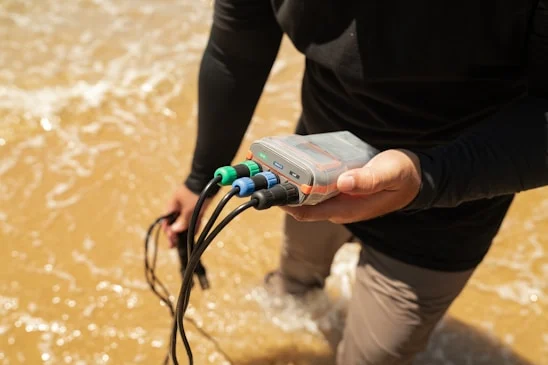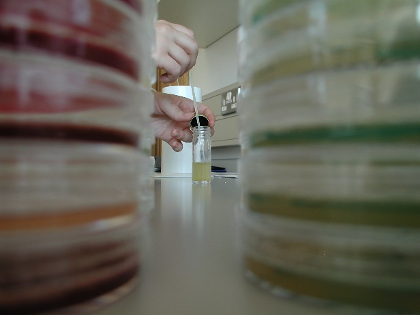
Laboratory analysis supports seafood safety monitoring.

Overview

Ensuring Irish seafood is safe, clean, and trusted

The Marine Institute monitors contaminants and chemical residues in seafood to protect consumer health and ensure products meet EU safety standards. This work supports confidence in Irish seafood at home and in export markets.

Seafood safety at a glance

The monitoring programme connects sampling, laboratory testing, and control planning so seafood safety evidence can support consumer protection and confidence in Irish seafood.

Contaminants in seafood

We monitor fish and shellfish from Irish waters, including wild catch and farmed products, to understand contaminant levels and ensure they remain within safe legal limits.

Chemical residues in farmed fish

We monitor farmed fish for chemical residues to protect consumer health and meet EU food safety requirements.

EU food safety standards

Monitoring confirms compliance with EU regulations and provides evidence that Irish seafood is safe to eat.

Monitoring areas

What we monitor

Seafood safety monitoring focuses on contaminants in seafood and chemical residues in farmed fish.

Coastal sea view representing seafood from Irish waters

Contaminants in seafood

Seafood is a healthy food choice, but it can contain low levels of environmental contaminants, including metals such as mercury, hydrocarbons, pesticides, and industrial chemicals.

Fish swimming underwater representing farmed fish residue monitoring

Chemical residues in farmed fish

Farmed fish are monitored for residues to help detect the illegal use of prohibited or unauthorised substances, as well as the misuse of authorised veterinary medicines.

How we monitor contaminants

We carry out regular sampling of fish, shellfish, and crustaceans landed at Irish ports and grown in Irish waters.

Build a long-term database

The monitoring programme builds a long-term database of contaminant levels.

Confirm compliance

The programme confirms compliance with EU regulations.

Provide safety evidence

The programme provides evidence that Irish seafood is safe to eat and supports the continued access of Irish seafood to international markets.

Contaminants

Contaminants in seafood

Seafood is a healthy food choice, but it can contain low levels of environmental contaminants. These include metals such as mercury, as well as substances like hydrocarbons, pesticides, and industrial chemicals.

We monitor fish and shellfish from Irish waters, including wild catch and farmed products. This helps us understand contaminant levels and ensure they remain within safe legal limits.

Monitoring chemical residues in farmed fish

We monitor farmed fish for chemical residues to protect consumer health and to meet EU food safety requirements.

Detect illegal or unauthorised use

This monitoring helps detect the illegal use of prohibited or unauthorised substances, as well as the misuse of authorised veterinary medicines.

Check authorised medicines and treatments

Authorised veterinary medicines and treatments may be used, and sometimes must be used, to control disease and infestation as part of health control plans, for example antibacterial and antiparasitic treatments.

Meet Member State requirements

All European Member States are required to monitor the use of veterinary medicine in food-producing animals to ensure that farmed fish do not contain residues that could be harmful to consumers.

Control plan

Working as part of the national residue risk-based control plan

We work with the Department of Agriculture, Food and the Marine, the Sea-Fisheries Protection Authority, and the Food Safety Authority of Ireland as part of the national residue risk-based control plan. This programme forms part of Ireland’s annual National Risk-Based Control Plan.

Use the evidence

The aquaculture control plan involves sampling farmed finfish at farm level and at primary processing or packing levels. Samples are tested in line with the aquaculture risk-based control plan.

Marine laboratory workspace used for seafood safety analysis
Category: Medicines

Check that only approved medicines are used

Samples are tested for a wide range of substances to ensure that only approved medicines are used.

Digital marine data screen representing residue monitoring evidence
Category: Legal limits

Confirm residue levels remain within legal limits

Testing checks that residue levels remain within legal limits for authorised substances.

Coastal sea view representing Irish seafood safety monitoring
Category: Publications

Find publications or contact the chemistry team

For a publication, see the OAR or contact the Marine Institute chemistry team.

Contact the chemistry team
Monitoring helps ensure that food products are safe and meet EU standards. It also supports sustainable aquaculture and animal welfare.
Seafood safety monitoring outcome

Get more information

For a publication, see the OAR or contact the chemistry team. The source names the following residue-monitoring resources for inclusion as calls to action.

Residues Recent Publication

Publication link required

The source refers to a recent residues publication and to OAR, but does not provide the publication URL.

Residues Booklet

Download file or URL required

Booklet file or URL to be supplied before final sign-off.

Residues Posters

Download file or URL required

Poster file or URL to be supplied before final sign-off.

Contact the chemistry team

For seafood safety publications or monitoring queries, contact the Marine Institute chemistry team.